
The Blog
August 4, 202680 Years of ACT: Growing Up

In our last post, we explored how Asheville Community Theatre came together in the summer of 1946, culminating with its first membership campaign on July 17, 1946, when the theatre first opened itself to the community.
ACT’s first production, Dark of the Moon (the first non-professional performance!), opened at the City Auditorium in August 1946, but the young organization had no permanent home. For more than two decades, productions were staged wherever space could be found. Rehearsals were held at the YMCA. The scene shop operated out of a basement room in Norburn Hospital (now Mission Hospital). In 1953, ACT found a semi-permanent home at William Randolph School.
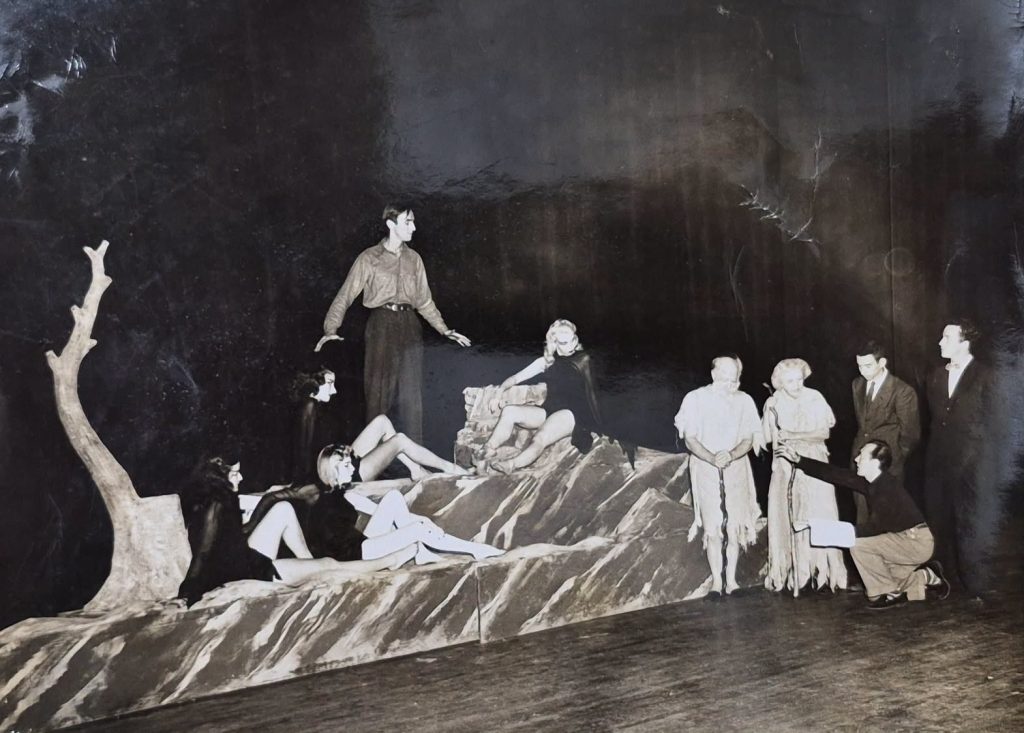
Even in those early years, ACT earned a reputation beyond Asheville. On January 12, 1947, Charlton Heston and his wife, Lydia Clarke, arrived from New York to co-direct ACT’s third production, The Male Animal. They remained in Asheville to direct seven productions that season.
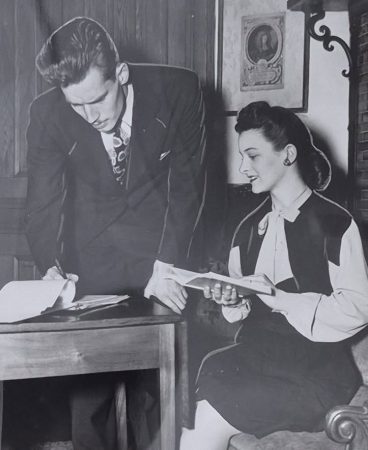
On August 1, 1947, Heston directed the first non-professional production of Tennessee Williams’ The Glass Menagerie. Heston famously received permission by calling Williams and asking, “Can I do your little ghost play?” Heston’s time with ACT lasted just one remarkable season. Years later, he reflected that when he arrived in Asheville, he wasn’t sure whether he wanted to be an actor or a director. His season with ACT helped answer that question, setting him on the path that would define his career. Lydia Clarke Heston likewise credited their time in Asheville as a transformative chapter in both of their lives.
As the theatre grew, so did its search for a permanent home. In 1967, volunteers transformed a former beer warehouse on Biltmore Avenue into the Thomas Wolfe Playhouse, finally giving ACT a theatre designed for its productions. In 1971, the building was condemned, forcing ACT to begin the search all over again. In 1971, property was purchased at 35 East Walnut Street and the groundbreaking ceremony took place on September 16th. The musical Camelot was the first production and opened on August 4, 1972.
In the 1980s, ACT introduced Second Stage Readers Theatre, expanding opportunities for volunteers and audiences to experience plays through staged readings. Building on that commitment to lifelong participation, The Autumn Players were founded as part of Second Stage Readers Theatre in 1992, creating a theatre company specifically for older adults. Today, the Autumn Players present a six-show season of Readers Theatre performances in 35below and at the Osher Lifelong Learning Institute on the UNC Asheville campus as well as poetry readings, play-reading gatherings, and additional performances at retirement communities.
1992 also marked the return of two familiar faces. On August 15, Charlton and Lydia Clarke Heston returned to Asheville Community Theatre after a forty-five-year absence to perform A.R. Gurney’s Love Letters. The event reunited the couple with the theatre where their professional journeys had taken shape, and its success led to the establishment of the ACT Endowment Fund in May 1993 – helping to preserve funds for the organization’s future.
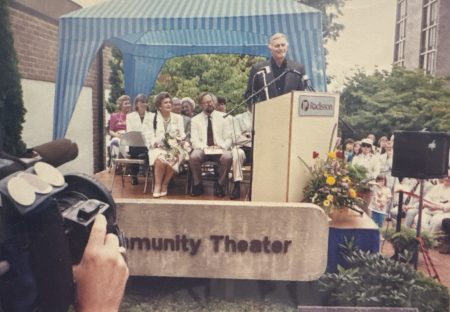
The new century brought new partnerships and new opportunities. In 2002, ACT opened 35below, a 49-seat black box theatre that the Asheville Citizen-Times described as one of two “big steps forward for ACT.” The intimate venue created opportunities for emerging artists, producing partnerships, experimental productions, and new voices to find an audience.
Another important addition to the ACT family arrived during this period, Tanglewood Children’s Theatre. Founded in 1959 by twelve-year-old John Haber, Tanglewood spent decades performing in locations across Asheville, including the Asheville Mall and UNC Asheville. On April 10, 2001, ACT and UNC Asheville “joined forces” to operate the program together, and by the mid-2000s, Tanglewood had found its permanent home as part of Asheville Community Theatre. Today, its legacy lives on through Tanglewood Summer, the ACT Education Department’s summer theatre program, and the Tanglewood Troupe, an auditioned annual troupe (in its third year) that provides professional training to more than sixty young artists each season.
Eighty years after volunteers invited the community to join them at a membership table in the Bon Marché Department Store, Asheville Community Theatre has become one of the nation’s largest community theatres, ranking in the top 5.5% nationally. It is the second-oldest community theatre in North Carolina and a year-round arts organization serving thousands of people each year.
See our next post about what comes next for ACT.
Return to all posts >
Comments are closed.